
Guía del comprador experto 2025 del Volkswagen Golf eléctrico: 4 factores clave para los importadores (VO vs. ID.3)
25 de diciembre de 2025
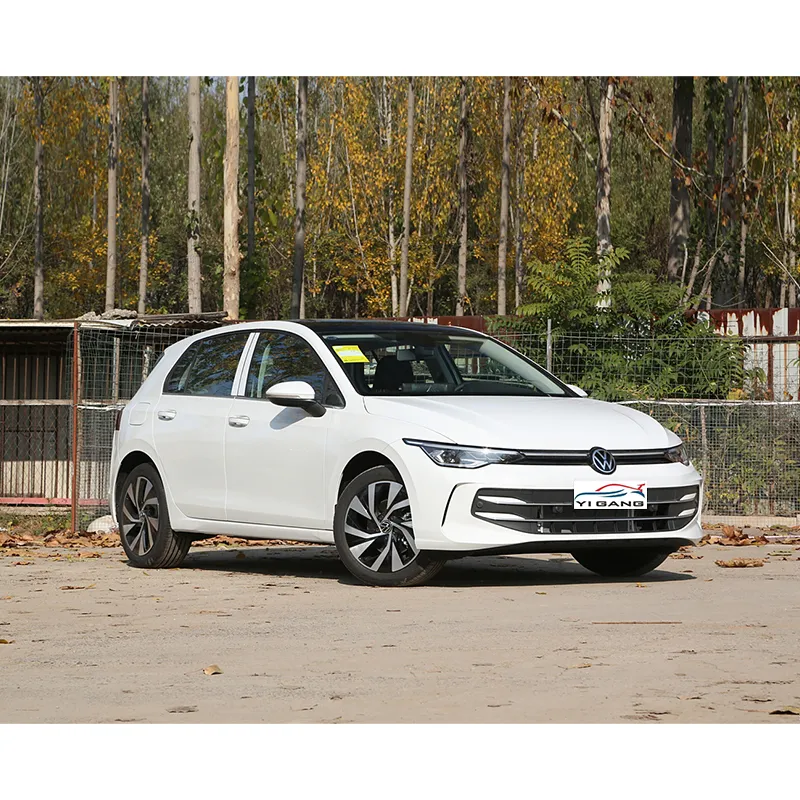
Resumen
Este análisis examina la viabilidad del descatalogado Volkswagen Golf eléctrico como vehículo de ocasión para su exportación internacional en 2025, comparándolo con su sucesor, el Volkswagen ID.3. El estudio evalúa cuatro factores principales pertinentes para los exportadores de vehículos que se dirigen a los mercados de Sudamérica, Rusia, el Sudeste Asiático, Oriente Medio y Sudáfrica. Estos factores incluyen un análisis detallado del coste total de propiedad (TCO), una revisión en profundidad de la tecnología de las baterías y los patrones de degradación, la idoneidad del mercado basada en el clima regional y la economía de los consumidores, y los aspectos prácticos del abastecimiento y la asistencia posventa. Los resultados indican que, aunque el ID.3 ofrece una tecnología, una autonomía y unas capacidades de carga superiores, el Volkswagen Golf eléctrico de segunda mano presenta una propuesta de valor convincente para determinados mercados urbanos sensibles al precio, debido a su menor coste de adquisición y a la amplia disponibilidad de piezas de su plataforma compartida PQ35. El documento sostiene que una estrategia de exportación exitosa requiere una comprensión matizada de los puntos fuertes y débiles de cada modelo en relación con las condiciones medioambientales y económicas únicas de la región de destino.
Principales conclusiones
- Evalúe el coste total de propiedad; el menor precio del e-Golf' puede ser una ventaja clave.
- Evalúe el estado y la autonomía de la batería, teniendo en cuenta el impacto de los climas extremos en el rendimiento.
- Analizar la idoneidad del mercado; el Volkswagen Golf eléctrico es ideal para regiones urbanas sensibles al precio.
- Considera el soporte postventa; el e-Golf se beneficia de la red mundial de recambios Golf.
- La nueva plataforma MEB de ID.3's ofrece una mayor eficiencia, pero presenta retos de servicio únicos.
- El suministro de modelos con volante a la derecha para mercados como Sudáfrica requiere canales específicos.
- Comprender los aranceles de importación y las normativas locales que influyen significativamente en la rentabilidad final.
Índice
- Historia de dos Volkswagen: Navegar por el mercado de la exportación en 2025
- Factor 1: Cálculo económico - Coste total de propiedad y rentabilidad
- Factor 2: El corazón de la máquina: tecnología de baterías, degradación y autonomía real
- Factor 3: Un mundo de diferencias - Idoneidad del mercado y demanda regional
- Factor 4: La realidad del exportador: aprovisionamiento, logística y asistencia posventa
- Preguntas más frecuentes (FAQ)
- El futuro de las exportaciones de vehículos eléctricos
- Referencias
Historia de dos Volkswagen: Navegar por el mercado de la exportación en 2025
La transición mundial hacia la movilidad eléctrica presenta un paisaje en constante evolución, un teatro dinámico donde el progreso tecnológico y las realidades del mercado interpretan una intrincada danza. Para el exportador internacional de vehículos en 2025, este paisaje no es un mero objeto de observación, sino un campo de oportunidades que exige un análisis cuidadoso y una toma de decisiones estratégica. En este contexto, el legado del Volkswagen Golf eléctrico, o e-Golf, plantea una cuestión de peso. La producción cesó en 2020 para dar paso a la plataforma ID., pero sigue existiendo un sólido mercado secundario para este vehículo eléctrico pionero. La pregunta central para un exportador es la siguiente: ¿El e-Golf usado, un vehículo nacido de la adaptación de una plataforma de motor de combustión interna (ICE), sigue teniendo valor para los mercados de Sudamérica, Rusia, el Sudeste Asiático, Oriente Medio y Sudáfrica? ¿O su sucesor, el Volkswagen ID.3, lo ha dejado totalmente obsoleto?
Esta pregunta no tiene una respuesta sencilla y universal. Requiere un compromiso profundo, casi filosófico, con las capacidades y limitaciones inherentes a cada vehículo, vistas a través de la lente de las necesidades prácticas de un exportador. Debemos ir más allá de las especificaciones superficiales y tener en cuenta el elemento humano: la vida diaria del usuario final, las capacidades del mecánico local y el cálculo financiero del importador. El e-Golf representa una forma familiar, una reconfortante continuidad con uno de los diseños automovilísticos más exitosos de la historia. Es, en esencia, un corazón eléctrico colocado dentro de una carrocería conocida y de confianza. El ID.3, por el contrario, es una reinvención del coche eléctrico compacto, construido sobre la plataforma modular MEB, un testimonio del futuro eléctrico de Volkswagen.
Tomar esta decisión supone sopesar el atractivo pragmático de lo conocido frente a la promesa de rendimiento de lo nuevo. El hecho de que el e-Golf comparta plataforma con su omnipresente homólogo de combustión interna sugiere un mundo de piezas de repuesto accesibles y procedimientos de servicio conocidos, una ventaja significativa en los mercados en desarrollo, donde los conocimientos especializados en VE pueden ser escasos. Su bajo coste de adquisición en el mercado de segunda mano lo convierte en un atractivo punto de entrada para los consumidores sensibles al precio. Sin embargo, sus fundamentos tecnológicos son producto de su tiempo, con una batería más pequeña, una carga más lenta y un sistema de gestión térmica menos sofisticado. El ID.3, con sus diversas opciones de batería, su mayor eficiencia y su moderna arquitectura, parece ser el vehículo técnicamente superior. Su éxito en los mercados maduros es innegable. Pero, ¿se traduce esta superioridad en un mejor argumento comercial para cada destino de exportación?
Esta guía diseccionará esta compleja decisión mediante un examen estructurado de cuatro factores fundamentales. Investigaremos el coste total de propiedad, no sólo para el usuario final, sino para toda la cadena de valor de la exportación. Examinaremos la tecnología de las baterías, proyectando su longevidad y rendimiento en las diversas y a menudo duras condiciones climáticas de sus mercados objetivo. Evaluaremos la idoneidad para el mercado de cada modelo, ajustando sus características a las realidades económicas e infraestructurales específicas de regiones que van desde el calor de Dubai al frío de Siberia. Por último, abordaremos los aspectos prácticos del aprovisionamiento, el transporte y la asistencia posventa. El objetivo no es declarar un único "ganador", sino proporcionarle a usted, el exportador, los conocimientos profundos y matizados necesarios para hacer una elección rentable y sostenible entre estos dos capítulos distintos de la historia eléctrica de Volkswagen.
Factor 1: Cálculo económico - Coste total de propiedad y rentabilidad
La base del éxito de cualquier negocio de exportación es un cálculo económico claro. Cuando se compara el Volkswagen Golf eléctrico con el ID.3, el precio inicial es sólo el primer capítulo de un relato financiero mucho más largo. Un análisis exhaustivo del coste total de propiedad (CTP) es esencial, no solo para prever la propia rentabilidad, sino también para entender la propuesta de valor que se ofrece al consumidor final en el mercado de destino. En 2025, la diferencia de precio entre un e-Golf usado y un ID.3 usado comparable es significativa, lo que crea una divergencia estratégica fundamental.
Costes de adquisición y desembolso inicial
La ventaja más inmediata del Volkswagen Golf eléctrico reside en su coste de adquisición. Al tratarse de un modelo antiguo que lleva cinco años fuera de producción, su valor en el mercado europeo de coches usados se ha depreciado considerablemente más que el del ID.3 más nuevo. Para un exportador, este punto de entrada más bajo reduce el desembolso inicial de capital y mitiga el riesgo financiero. Un e-Golf de 2019, el último modelo con la batería más grande de 35,8 kWh, puede adquirirse por 40-50% menos que un ID.3 de 2020 o 2021 con una batería de 58 kWh.
Esta diferencia de costes es el eje en torno al cual girará su estrategia de mercado. En regiones sensibles a los precios, como partes del Sudeste Asiático o Sudamérica, donde el informe Perspectivas mundiales del VE 2025 de la AIE destaca el papel fundamental de la asequibilidad a la hora de impulsar la adopción (AIE, 2025), la capacidad de ofrecer un VE fiable de ingeniería alemana a un precio significativamente inferior al de los modelos más recientes puede ser una poderosa herramienta de entrada en el mercado. La siguiente tabla muestra una comparación simplificada de los costes de adquisición, que sirve como referencia antes de tener en cuenta los gastos de envío, los aranceles de importación y los ajustes del mercado local.
Cuadro 1: Comparación de los costes de adquisición estimados para 2025 (mercado de origen europeo)
| Modelo | Año | Batería (utilizable) | Kilometraje estimado | Coste medio de adquisición (EUR) |
|---|---|---|---|---|
| Volkswagen Golf eléctrico | 2019 | 32 kWh | 60.000 - 90.000 km | €12,000 – €15,000 |
| Volkswagen ID.3 Pure | 2021 | 45 kWh | 40.000 - 70.000 km | €17,000 – €21,000 |
| Volkswagen ID.3 Pro | 2021 | 58 kWh | 40.000 - 70.000 km | €20,000 – €24,000 |
| Volkswagen ID.3 Pro S | 2021 | 77 kWh | 40.000 - 70.000 km | €23,000 – €28,000 |
Nota: Los costes son estimaciones para 2025 basadas en las tendencias actuales de depreciación del mercado y no incluyen las tasas de transporte, inspección o exportación. Datos sintetizados a partir de análisis de mercado y plataformas como EV-Database (2025).
El ID.3, aunque más caro, ofrece diversas opciones de batería. Esto permite un enfoque más personalizado. Un ID.3 Pure con una batería de 45 kWh puede representar un término medio, ya que ofrece una tecnología más moderna que el e-Golf sin el coste más elevado de los modelos Pro o Pro S, con baterías más grandes. Su decisión debe basarse en el poder adquisitivo y las prioridades de su público objetivo.
Costes en destino: Aranceles de transporte e importación
El coste de adquisición es sólo el principio. El "coste en destino", es decir, el precio total una vez que el vehículo llega al país de destino, es lo que realmente define su base financiera. Incluye los gastos de envío, el seguro y, lo que es más importante, los aranceles de importación y los impuestos locales. Estos costes pueden alterar drásticamente el precio final y variar enormemente de una región a otra.
Por ejemplo, Brasil ha ajustado sus aranceles de importación de VE, que antes estaban exentos. Como se señala en el informe de la AIE (2025), estos cambios provocaron un adelanto de las exportaciones al país. A partir de 2025, estos aranceles se reintroducirán progresivamente, lo que hará que los vehículos básicos de menor coste, como el Volkswagen Golf eléctrico, sean más resistentes a esta presión fiscal. Un arancel 35% sobre un e-Golf de 13.000 euros añade 4.550 euros, mientras que el mismo arancel sobre un ID.3 de 22.000 euros añade 7.700 euros. Esta diferencia de 3.150 euros sólo en impuestos puede ser el factor decisivo en la competitividad del vehículo'en un mercado en el que los consumidores son muy conscientes del precio.
Por el contrario, algunos países de Oriente Próximo, cuyo objetivo es promover la adopción del VE, pueden tener tarifas más bajas o nulas, lo que reduce el impacto de la diferencia de coste inicial. Su modelo financiero debe ser granular, con cálculos separados para cada país objetivo. La relativa sencillez y el menor valor declarado del e-Golf pueden proporcionar sistemáticamente un amortiguador frente a los impuestos ad valorem (impuestos basados en el valor), lo que lo convierte en una apuesta estratégicamente más segura en regiones con regímenes fiscales impredecibles o elevados.
TCO y comerciabilidad para el usuario final
Su capacidad para vender un vehículo depende de la propuesta de valor que ofrezca al usuario final. Aunque el precio de compra es primordial, los consumidores entendidos, sobre todo en mercados con altos costes de combustible, son cada vez más conscientes del coste total de propiedad. Aquí, la narrativa se vuelve más compleja.
-
Mantenimiento: El Volkswagen Golf eléctrico tiene una clara ventaja. Está construido sobre la plataforma PQ35, compartida con millones de Golf de gasolina y diésel de todo el mundo. Esto significa que los componentes ajenos al tren motriz -suspensión, frenos, paneles de la carrocería, piezas del interior- están ampliamente disponibles y son conocidos por los mecánicos de todo el mundo. Para un propietario de Moscú o Johannesburgo, encontrar una pinza de freno o un interruptor de ventanilla de repuesto es sencillo y asequible. El ID.3, construido sobre la plataforma MEB, no tiene esta ventaja. Es posible que haya que importar una pieza especializada, lo que prolongaría los tiempos de inactividad y aumentaría los costes. Esta fiabilidad y facilidad de mantenimiento es un poderoso argumento de venta. Puedes comercializar con confianza el e-Golf como "el coche eléctrico que tu mecánico local ya conoce".
-
Costes energéticos: El ID.3 retoma el liderazgo en eficiencia. Su plataforma específica para vehículos eléctricos, una aerodinámica mejorada y una tecnología de baterías y motores más avanzada se traducen en un menor consumo de energía por kilómetro. Un ID.3 Pro (58 kWh) suele alcanzar una eficiencia de unos 15,5 kWh/100 km, mientras que el posterior e-Golf (32 kWh) se acerca más a los 17,5 kWh/100 km (EV-Database, 2025). A lo largo de un año de conducción de 15.000 km, esta diferencia equivale aproximadamente a 300 kWh. Aunque en regiones con electricidad barata esto sólo puede traducirse en un modesto ahorro de costes, contribuye a una mayor autonomía efectiva con cada carga, lo que supone un beneficio psicológico y práctico para el conductor.
-
Valor de reventa: En los mercados de exportación a los que se dirige, el ID.3, al ser el vehículo más nuevo y tecnológicamente más avanzado, tendrá probablemente un mayor valor de reventa tras 3-5 años de uso local. Sin embargo, la curva de depreciación del e-Golf puede aplanarse antes debido a su menor precio inicial y a su atractivo como vehículo urbano duradero y sin lujos. Su conexión con la legendaria marca Golf proporciona un efecto de halo que podría reforzar su percepción de valor a largo plazo más de lo que cabría esperar para un vehículo de su edad.
En última instancia, el cálculo económico favorece al Volkswagen Golf eléctrico en mercados donde el coste inicial es la principal barrera para la adopción del VE y donde la tecnología robusta, sencilla y de fácil mantenimiento se valora más que las prestaciones de vanguardia. Para los exportadores que se dirigen a estos segmentos, el e-Golf no es una reliquia obsoleta, sino un activo estratégico. Para los mercados urbanos más acomodados o los clientes con desplazamientos más largos, la mayor autonomía y eficiencia del ID.3 presentarán un coste total de propiedad más convincente, justificando su mayor coste inicial. Una estrategia dual, ofreciendo el e-Golf como un punto de entrada asequible y el ID.3 como una actualización premium, podría ser el enfoque más rentable. Explorar un inventario diverso de vehículos eléctricos Volkswagen de alta calidad le permite atender a ambos extremos de este espectro.
Factor 2: El corazón de la máquina: tecnología de baterías, degradación y autonomía real
When dealing with used electric vehicles, the battery is not just a component; it is the very heart of the machine, and its health dictates the vehicle's utility, value, and ultimate desirability. For an exporter considering the electric Volkswagen Golf and the ID.3, a forensic understanding of their respective battery systems is non-negotiable. The differences in their chemistry, capacity, and thermal management create divergent performance profiles that are magnified by the varied climates of your target markets. This is where technical knowledge translates directly into business intelligence.
A Generational Divide in Battery Architecture
The distinction between the e-Golf and the ID.3 is fundamentally a story of two different eras in EV development.
En electric Volkswagen Golf (specifically the post-2017 model with the 35.8 kWh gross / 32 kWh usable battery) utilizes a prismatic cell format with a Lithium-Ion Nickel Manganese Cobalt (NMC) chemistry. It was a pragmatic and effective solution for its time, designed to fit within the constraints of a platform originally intended for an internal combustion engine. However, its most significant limitation is its thermal management system: it is air-cooled. This is a critical point. An air-cooled system relies on ambient air to dissipate heat generated during charging and discharging. While adequate for temperate climates like Germany's, it offers very limited capability to reject heat in hot environments or to warm the battery in extreme cold.
En Volkswagen ID.3, built on the dedicated MEB platform, represents a major leap forward. It uses a more modern battery architecture with either pouch or prismatic cells (depending on the supplier) and, crucially, features a sophisticated active liquid thermal management system. This system circulates a coolant through plates integrated into the battery pack, allowing it to either shed heat to a radiator or warm the battery using a high-voltage heater. This active control maintains the battery within its optimal operating temperature range (typically 20-40°C), which has profound implications for performance, charging speed, and long-term health.
The following table breaks down the key technical differences, providing a clear picture of this generational divide.
Table 2: Battery and Charging Specification Comparison
| Característica | 2019 Electric Volkswagen Golf | 2021 Volkswagen ID.3 Pro (58 kWh) |
|---|---|---|
| Plataforma | PQ35 (Adapted from ICE) | MEB (Dedicated EV) |
| Gross Battery Capacity | 35,8 kWh | 62 kWh |
| Usable Battery Capacity | ~32 kWh | ~58 kWh |
| Cell Chemistry | NMC | NMC |
| Thermal Management | Passive Air Cooling | Active Liquid Cooling & Heating |
| WLTP Range (New) | 231 km | 426 km |
| Max DC Charge Power | 40 kW | 120 kW |
| Time to 80% (DC Fast) | ~45 minutes | ~35 minutes |
| On-board AC Charger | 7.2 kW | 11 kW |
Data compiled from manufacturer specifications and historical data from EV-Database.org (2025).
The Unavoidable Reality: Battery Degradation
Every lithium-ion battery degrades over time and with use. This loss of capacity is the single greatest concern for a used EV buyer. The rate of degradation is influenced by three main factors: age (calendar aging), usage (cycle aging), and temperature. This is where the e-Golf's and ID.3's different thermal management systems become critically important.
For the electric Volkswagen Golf, its reliance on passive air cooling makes it more vulnerable to degradation in extreme climates.
- Hot Climates (Middle East, Southeast Asia, parts of South America): In regions where ambient temperatures regularly exceed 35°C, an e-Golf's battery will struggle to shed heat, especially during DC fast charging or prolonged high-speed driving. Sustained high temperatures accelerate the chemical side reactions within the battery cells, leading to a faster-than-average loss of capacity. An e-Golf that has spent its life in a hot climate, or is being exported to one, can be expected to show significantly higher degradation than one from a temperate region. It would not be unreasonable to see a 5-year-old e-Golf with 15-20% degradation in a hot climate, reducing its already modest range to well under 150 km.
- Cold Climates (Russia): In sub-zero temperatures, the internal resistance of the battery increases, reducing available power and slowing down charging. The e-Golf lacks an effective battery heater, meaning it relies on waste heat from the motor and its own internal resistance to warm up, which is a slow process. In a Russian winter, drivers will experience a temporary range reduction of 30-40% and extremely slow DC charging speeds until the pack warms up. While this does not cause the same permanent degradation as heat, it severely impacts winter usability.
En Volkswagen ID.3 is far more resilient. Its liquid-cooling system actively combats heat buildup during charging in Dubai, preserving the battery's health and enabling consistent fast-charging speeds. In the cold, the system can use its high-voltage heater to bring the battery up to an optimal temperature for driving and charging, mitigating the severe range and charging penalties seen in the e-Golf. This makes the ID.3 a much safer and more reliable option for export to markets with climatic extremes. When sourcing an ID.3, you are not just buying more range; you are buying the assurance of technological resilience.
Real-World Range: The Ultimate Litmus Test
The WLTP range figures are a useful benchmark, but they do not tell the whole story. As an exporter, you must be able to provide your customers with realistic range expectations for their local conditions.
-
E-Golf Reality: A 2019 electric Volkswagen Golf with a healthy battery might achieve 180-200 km in ideal city driving conditions (20°C). In a hot climate like Bangkok with the air conditioning running, this could easily drop to 140-150 km. On a highway at 120 km/h, the range could fall below 130 km. In a -10°C Moscow winter, the initial range might be as low as 110-120 km. This performance profile firmly positions the e-Golf as an urban vehicle, a second car for city commuting, which is a perfectly viable and large market segment in many megacities.
-
ID.3 Reality: A 2021 ID.3 Pro with the 58 kWh battery offers a far more versatile experience. Its real-world range of 330-350 km in temperate conditions makes it suitable for inter-city travel. The impact of air conditioning in a hot climate is less pronounced as a percentage of total range, likely reducing it to around 280-300 km. In the cold, the battery heater ensures that while there is still a range penalty (perhaps down to 240-260 km), it is far less dramatic than the e-Golf's. The ID.3 is a true all-purpose vehicle, capable of serving as a primary car for a family.
For your business, this means clear communication and strategic positioning. The e-Golf should be marketed honestly as a dependable, affordable city car with predictable ownership costs. The ID.3 is the premium offering, for customers who demand greater range, flexibility, and performance in all conditions. Verifying the State of Health (SoH) of the battery using a tool like an OBD2 scanner and a compatible app before purchase is an indispensable step in your due diligence process for either model.
Factor 3: Un mundo de diferencias - Idoneidad del mercado y demanda regional
A vehicle, no matter its technical merits, exists within a specific socio-economic and environmental context. An EV that is a bestseller in Norway might be an impractical proposition in Brazil. Therefore, a granular analysis of your target regions is the third critical factor in deciding between the electric Volkswagen Golf and the ID.3. We must consider the interplay of consumer purchasing power, government incentives, infrastructure readiness, and climate.
South America: A Price-Sensitive, Emerging Market
Countries like Brazil, Colombia, and Chile are experiencing a surge in EV interest, a trend confirmed by the IEA's 2025 report showing a 60% jump in sales across emerging markets (IEA, 2025). However, this growth is overwhelmingly driven by affordability. The influx of competitively priced Chinese models has fundamentally shaped consumer expectations.
-
Electric Volkswagen Golf: In this context, the used e-Golf is exceptionally well-positioned. Its lower acquisition cost allows it to compete directly with new, smaller EVs from Chinese brands like BYD, while carrying the significant brand prestige of Volkswagen. For many middle-class families in São Paulo or Bogotá, an e-Golf could be their first entry into EV ownership, serving as a reliable urban commuter. Its limited range is less of a concern for city-based driving patterns, and its familiar Golf architecture is a major asset in a region where specialized EV repair expertise is still developing.
-
Volkswagen ID.3: The ID.3, with its higher price point, competes in a different segment. It vies for consumers who might also be considering a new Tesla Model 3 or other premium offerings. While its superior range is an advantage, the price premium may limit its addressable market to a smaller, more affluent demographic. An exporter might find success positioning the ID.3 as a sophisticated European alternative, but the sales volume will almost certainly be lower than that achievable with the aggressively priced e-Golf.
Russia and Colder CIS Climates: The Primacy of Thermal Management
In Russia and neighboring countries, the primary environmental challenge is the extreme cold. Battery performance in winter is not a theoretical concern but a daily reality that dictates the vehicle's usability.
-
Electric Volkswagen Golf: The e-Golf's passive air-cooling system is its Achilles' heel in this market. The significant temporary range loss (up to 40%) in sub-zero temperatures and painfully slow charging until the battery warms up make it a challenging proposition as a primary vehicle. It could, however, find a niche as a short-distance city car for users with a garage where the car can be kept relatively warm and charged overnight. Its robust, simple construction is a plus, but the battery's vulnerability to cold is a major marketing hurdle that must be addressed with transparency.
-
Volkswagen ID.3: The active liquid thermal management of the ID.3 is a game-changer here. The ability to pre-heat the battery while plugged in ensures that the driver starts their journey with near-optimal range and can rely on consistent DC fast-charging speeds. This technological superiority makes the ID.3 a far more practical and reliable all-season vehicle for the Russian market. Exporters should emphasize this feature heavily, as it directly addresses one of the biggest local pain points for EV adoption.
Southeast Asia and the Middle East: The Challenge of Extreme Heat
In the bustling cities of Thailand, Vietnam, the UAE, and Saudi Arabia, two factors dominate: intense urban congestion and extreme ambient heat.
-
Electric Volkswagen Golf: The heat is a significant concern for the e-Golf's long-term battery health. The air-cooled battery will degrade faster than in temperate climates. An exporter must prioritize sourcing vehicles from cooler European climates and be transparent with customers about the expected accelerated degradation. However, for the typical urban use-case in this region—short commutes in heavy traffic—the e-Golf’s limited range is often sufficient. Its smaller size is an advantage in congested streets, and its low running costs are very attractive when compared to gasoline vehicles. It can be successfully marketed as a highly economical city runabout.
-
Volkswagen ID.3: The ID.3's liquid-cooling system is, again, a massive advantage. It protects the battery from the damaging effects of extreme heat, ensuring better longevity and more reliable performance. Its greater range also provides a larger buffer for the energy-intensive use of air conditioning. In the sprawling cities of the Middle East, the ID.3's ability to handle longer commutes without daily charging makes it a more versatile and appealing option for a wider range of buyers. For those looking to import Volkswagen electric cars into these demanding climates, the ID.3 offers a greater degree of engineering assurance.
South Africa: A Unique Right-Hand Drive Market
South Africa presents a unique combination of factors: it is a right-hand drive (RHD) market, has a mix of urban and long-distance driving needs, and is facing challenges with its electricity grid stability (load-shedding).
-
Electric Volkswagen Golf: Volkswagen South Africa did sell the e-Golf locally in limited numbers, meaning RHD models exist and there is some baseline of local knowledge. Sourcing used RHD e-Golfs from markets like the UK is feasible. Its modest battery size is also an advantage in the context of load-shedding, as it can be fully recharged more quickly during the limited hours when power is available. It is an excellent fit for the urban commuting patterns of cities like Cape Town and Johannesburg.
-
Volkswagen ID.3: The ID.3 was not officially sold in South Africa initially, making RHD models scarcer on the used market, primarily available from the UK. The ID.3’s greater efficiency and range are appealing for the country's longer inter-city distances, but its reliance on a stable grid for charging its larger battery could be a concern for some buyers. The V2L (Vehicle-to-Load) capability of some ID.3 models could be a powerful selling point, allowing the car to function as a mobile power source during power cuts, a feature the e-Golf lacks.
In every region, the choice between the electric Volkswagen Golf and the ID.3 is not a simple matter of old versus new. It is a strategic decision that depends on a deep understanding of local needs, climate, and economic realities. The e-Golf’s enduring appeal lies in its simplicity, familiarity, and affordability, making it a powerful tool for unlocking entry-level EV markets. The ID.3’s strength is its modern, resilient technology, making it the superior choice for customers who demand more range, performance, and all-weather capability.
Factor 4: La realidad del exportador: aprovisionamiento, logística y asistencia posventa
The final, and perhaps most pragmatic, factor in this analysis moves from the theoretical to the tangible. For the vehicle exporter, the best car on paper is meaningless without a reliable supply chain and a viable plan for keeping it on the road in its destination market. The operational realities of sourcing, shipping, and supporting the electric Volkswagen Golf versus the ID.3 reveal distinct advantages and challenges for each model.
Sourcing: Finding the Right Vehicles at the Right Price
Your business begins with sourcing. In 2025, the primary markets for acquiring used e-Golfs and ID.3s are in Europe, particularly in countries with mature EV markets and robust leasing sectors.
-
Electric Volkswagen Golf: Sourcing the e-Golf is a relatively straightforward process. Large fleets were operated in countries like Germany, the Netherlands, and especially Norway. As these vehicles come off their initial leases and ownership cycles, they populate the used market in large numbers. This high volume creates a competitive marketplace, allowing exporters to be selective and negotiate favorable pricing. The key is to focus on the post-2017 models with the 35.8 kWh battery, as the earlier 24.2 kWh version offers a range that is simply too limited for most applications today. Due diligence is paramount; a vehicle history report and, most importantly, a battery State of Health (SoH) check are essential. A low-mileage e-Golf from a temperate climate like the Netherlands is a far more valuable asset than a high-mileage equivalent from a hotter or colder region.
-
Volkswagen ID.3: Sourcing the ID.3 presents a different dynamic. As a newer vehicle, the volumes on the used market are still growing. The first wave of 3-to-4-year-old lease returns is now the primary source. Competition for these vehicles is higher, including from domestic European buyers, which can keep acquisition prices firm. However, the ID.3 offers a wider variety of configurations (Pure, Pro, Pro S, with 45, 58, and 77 kWh batteries) (EV-Database, 2025). This allows an exporter to be more strategic, perhaps targeting the lower-cost "Pure" models for price-sensitive markets or the long-range "Pro S" for more affluent customers. Sourcing RHD models for markets like South Africa or Southeast Asian countries such as Thailand or Malaysia requires focusing specifically on the UK market, which can sometimes have different pricing structures and specification levels.
Logistics and Shipping: The Practicalities of Movement
Once sourced, the vehicles must be transported. Both the e-Golf and ID.3 fit within standard shipping containers and are suitable for Roll-on/Roll-off (Ro-Ro) shipping. There are no significant differences in the physical logistics of shipping one over the other.
The primary logistical consideration is battery safety regulations. All EVs are classified as Dangerous Goods (Class 9) for shipping due to the lithium-ion batteries. This requires specific documentation, including a Material Safety Data Sheet (MSDS) and ensuring the battery's state of charge is within the carrier's stipulated limits (often below 30%). Working with a freight forwarder experienced in EV shipping is essential to ensure compliance and avoid costly delays. While the procedures are the same for both models, the larger battery capacity of the ID.3 means that ensuring it is at the correct, lower state of charge before shipping may require more planning than for the smaller-batteried e-Golf.
The After-Sales Conundrum: A Decisive Advantage for the e-Golf
This is arguably the most critical operational factor for long-term success in an export market. A customer's ownership experience is defined not just by the car itself, but by their ability to maintain and repair it affordably.
-
Electric Volkswagen Golf: The e-Golf’s greatest strategic advantage lies in its shared platform. It is, fundamentally, a Golf. This means that a vast global network for spare parts already exists for a majority of its components. A mechanic in Lima, Peru, or Durban, South Africa, may not have seen an e-Golf before, but they have certainly worked on a Mk7 Golf. They can source suspension components, brake discs, window regulators, door handles, and interior trim from existing, established supply chains. This drastically reduces repair times and costs for the most common issues a vehicle faces. The only specialized components are the electric motor, inverter, and battery pack. While a battery failure is a major event, the motor and power electronics have proven to be exceptionally reliable. This "known quantity" factor builds immense consumer confidence and simplifies the exporter's task of establishing an after-sales support network.
-
Volkswagen ID.3: The ID.3’s bespoke MEB platform, while technologically superior, is a double-edged sword for after-sales support in non-official markets. Virtually no parts are shared with other common vehicles. A damaged headlight, a faulty suspension component, or a broken infotainment screen requires a specific ID.3 part that must be sourced from official channels, which can be slow and expensive in a region without official VW support for the ID. platform. Diagnostics also require specialized software (ODIS) and knowledge that is not yet widespread outside of official dealer networks. An exporter selling the ID.3 into a new market must be prepared to invest in creating their own parallel supply chain for spare parts and training for partner workshops, a significantly more complex and costly undertaking.
For the exporter, the choice is clear from an operational standpoint. The e-Golf offers a "plug-and-play" solution for after-sales support in many parts of the world, leveraging a pre-existing global infrastructure. The ID.3 requires the exporter to build that infrastructure themselves. This does not make the ID.3 an unviable export, but it does mean the business model must account for higher investment in service support to ensure customer satisfaction and protect the brand's reputation.
Preguntas más frecuentes (FAQ)
1. Is the electric Volkswagen Golf's 32 kWh battery still practical in 2025? For many applications, yes. Its real-world range of 150-200 km is more than sufficient for the average urban daily commute in many target regions. It is not suitable for long-distance travel, but as an affordable second vehicle or a primary city car, it remains highly practical. Its viability hinges on managing customer expectations and positioning it correctly in the market.
2. How does the e-Golf's air-cooled battery handle extreme climates? It struggles. In hot climates (above 35°C), the battery will degrade faster than liquid-cooled alternatives, and DC fast-charging speeds will be reduced to prevent overheating. In cold climates (below 0°C), drivers will experience significant temporary range loss and very slow charging until the battery warms up. It is best suited for temperate or mild climates.
3. Which Volkswagen ID.3 model is best for exporting? This depends entirely on the target market. The ID.3 Pro with the 58 kWh (usable) battery offers the best balance of range, performance, and cost, making it a versatile choice for most markets. The lower-cost 45 kWh "Pure" model is an excellent option for more price-sensitive regions, while the 77 kWh "Pro S" should be reserved for affluent markets where long-range capability is a key selling point.
4. How can I verify the battery health of a used electric VW before purchase? The most reliable method is to use an OBD2 (On-Board Diagnostics) scanner paired with a compatible smartphone app (such as Car Scanner ELM OBD2, LeafSpy for Nissan, or similar tools for VW). This allows you to read the battery's State of Health (SoH), which is a direct measurement of its current capacity relative to its original capacity. A visual inspection and a test drive are insufficient for determining battery health.
5. What are the biggest challenges in providing after-sales support for the ID.3 in a new market? The two main challenges are parts availability and diagnostic capabilities. Since the ID.3 is on the dedicated MEB platform, most of its parts are not shared with other vehicles, requiring a specialized supply chain. Secondly, repairs and diagnostics often require Volkswagen's specific ODIS software and trained technicians, which may be unavailable outside of official service networks. Exporters must plan to invest in parts importation and local technician training.
6. Why is the e-Golf's shared platform with the regular Golf so important? It means that a majority of the car's components—chassis, suspension, brakes, interior parts, body panels—are identical to one of the best-selling cars in history. This creates a vast, inexpensive, and readily accessible global supply of spare parts. This drastically lowers the cost and difficulty of most common repairs, a huge advantage in export markets without official EV support.
7. Can the electric Volkswagen Golf handle the road quality in developing regions? Yes, its chassis and suspension are based on the robust and well-tested Mk7 Golf platform, which was designed to handle a wide variety of global road conditions. Its build quality is generally considered very high, making it a durable choice for regions where road infrastructure may be less developed.
8. Is the ID.3's software more reliable than the e-Golf's? The e-Golf's infotainment and vehicle software are simpler and generally very stable, benefiting from years of development on the VW Group's older platforms. The ID.3 launched with widely reported software issues, though many of these have been addressed through over-the-air (OTA) updates. For an export model that may not receive official OTA support, the e-Golf's simpler, more mature software can be seen as a more reliable and less problematic option.
El futuro de las exportaciones de vehículos eléctricos
The choice between the venerable electric Volkswagen Golf and its modern successor, the ID.3, is not a simple one of good versus bad. It is a nuanced strategic decision that reflects the complex tapestry of the global automotive market in 2025. The analysis of ownership costs, battery resilience, market suitability, and logistical realities reveals that both vehicles have a distinct and valuable role to play for the astute exporter.
The electric Volkswagen Golf emerges not as an outdated model, but as a pragmatic and highly strategic tool for penetrating price-sensitive urban markets. Its strength lies in its familiarity and simplicity. The shared Golf platform provides an unparalleled advantage in after-sales support, demystifying repairs and ensuring parts availability in regions where specialized EV knowledge is scarce. Its lower acquisition cost makes electric mobility accessible to a broader audience, allowing your business to capture a vital entry-level segment. It is the sensible, dependable choice, wrapped in the enduring prestige of the Volkswagen brand.
The ID.3, in contrast, is the vehicle of the future, available today. Its dedicated MEB platform, superior efficiency, and advanced liquid-cooled battery system make it a more capable and resilient vehicle, particularly in climates with extreme heat or cold. It offers the range and performance that allow it to serve as a primary vehicle, appealing to a more affluent and technologically discerning customer. To export the ID.3 is to sell a promise of cutting-edge European engineering, but it requires a concurrent investment in building a support ecosystem for its specialized platform.
Therefore, the most sophisticated export strategy may not be to choose one over the other, but to leverage the unique strengths of both. By offering the electric Volkswagen Golf as the affordable and easily serviceable gateway to electric driving, and positioning the ID.3 as the premium, long-range alternative, you can address a wider spectrum of consumer needs. This dual approach allows you to build market share with the accessible e-Golf while establishing your brand as a purveyor of modern technology with the ID.3. Success in this evolving landscape demands not just the movement of metal, but a deep understanding of the capabilities and aspirations embodied within each vehicle.
Referencias
BloombergNEF. (2025). Electric vehicle outlook 2025.
BYD. (2025). Passenger vehicles. BYD Global. ;jsessionid=rdreuosQAxTbBQunoKZmDP1bwPYZUP7v6W-3LKdUn1lEb16DUjf8!900745659!803777694
BYD UK. (2025). BYD official site | Electric vehicles.
EV-Database. (2025). All electric vehicles.
EVSpecs. (2024). Electric cars with the longest range in km (miles).
Agencia Internacional de la Energía. (2025). Perspectivas mundiales del VE 2025. AIE.
U.S. Department of Energy. (2025). Alternative fuels data center: Electric vehicles for consumers.